
Geopoetry
event
Geopoetry/dʒɪ:əә(ʊ)’pəәʊɪtri/ noun. E21
[from GEO- + POETRY.]
POETICS. A theory and practice that locates poetry in the place and performance of the text.
Performed on 10 November 2012
The contemporary city is a place increasingly articulated (constructed) around work, the economy and the accumulation, production and consumption of capital. As the urban environment becomes increasingly privatised, the space of the city has become more prescribed (pre-written), with the main, if not exclusive, purpose of making and spending money. As a result, the majority of city dwellers live out their lives along a
a well-inscribed triangle running between home, work and the repeatedly revisited sites of consumption.
However, although the function of urban space is dictated by its design, the relationship between space and use is not as fixed as the architect, property-developer, owner or State would like us to think. We are still able to appropriate these spaces – to ‘misuse’ them – and, for a moment, reclaim them for our own ends. The act of reading texts in the urban environment, and therefore of performing them, is one way of doing this.
To this end, we have brought together texts written around the relationship between space and place in the urban environment. These range from the sociological and political to the poetic and the performative; but all reflect on
the diverse experience of the city. The distinction between space and place brings into
focus something peculiar to the contemporary city.
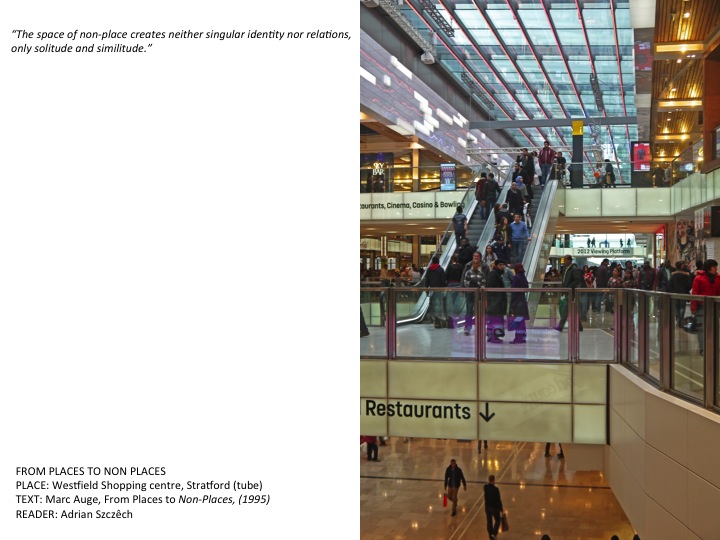
Space is a commodity. It has dimensions and can be measured, packaged, advertised and sold. Its political, economic and geographic boundaries can be demarcated, negotiated or fought over, reducing our relationship to the city to one which is quantifiable. Space is generic, without inherent qualities. ‘Public space’ is the buzzword of every developer and urban planner, but means practically nothing, as it has no real qualitative distinctions, merely generic legislative requirements in new urban developments for so many benches, fountains or works of public art.
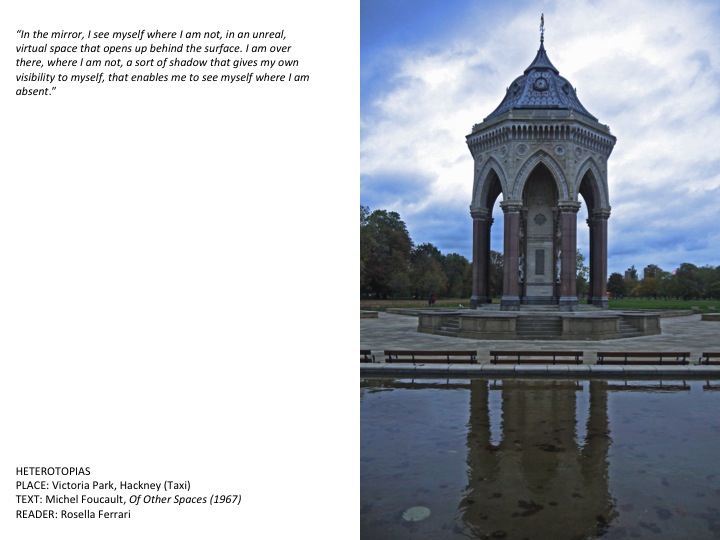
Place, by contrast, is specific and relational. It has a social history and qualities produced and reproduced by the actions of its inhabitants. Place has a temporal dimension; it
is where memories are created and reside, named and identified. It is through this temporal aspect that we engage with places as inhabitants of the city, and it is through both their physical occupation and our engagement with them in time, that their specificity is created.
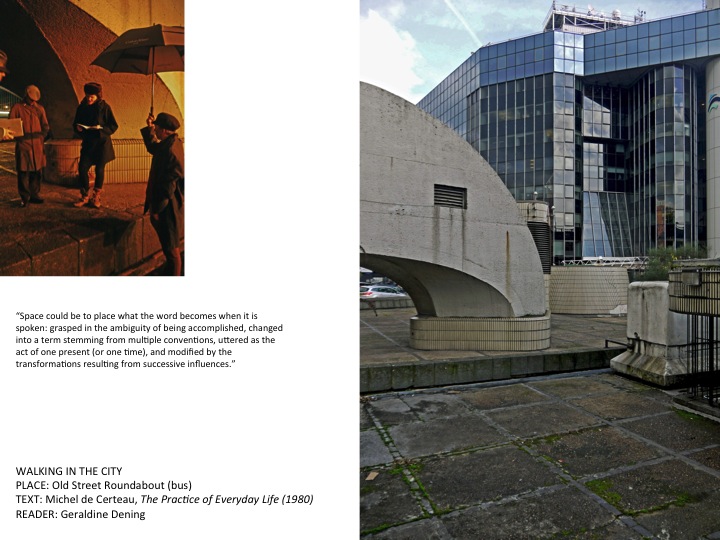
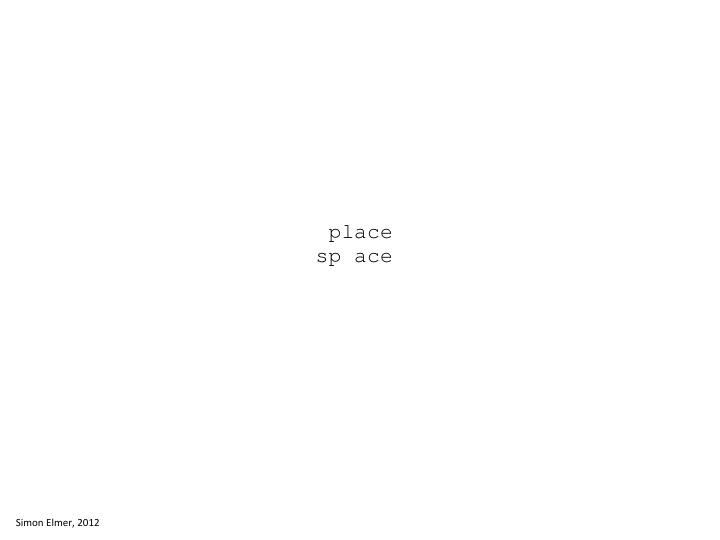
Space is to place, therefore, what language is to the spoken word: the abstract legislator of its concrete articulations. The act of geopoetry – the reading of a text in a public place – is a transgression of the designed function and intended use of that space, opening it to other readings.
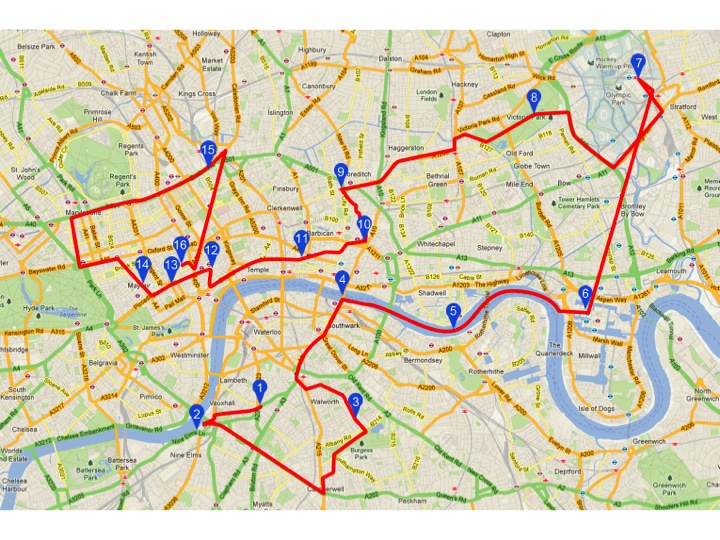
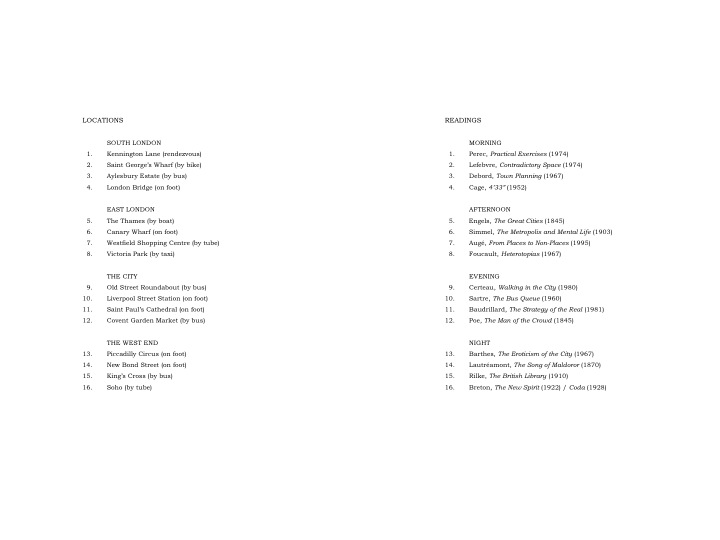
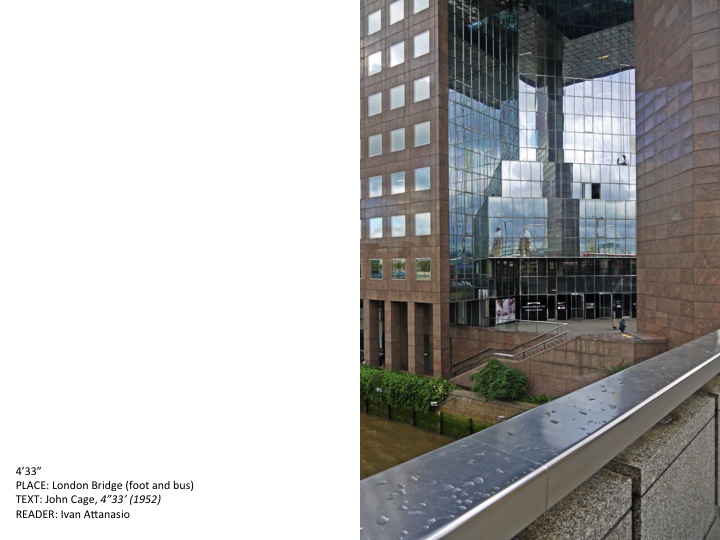
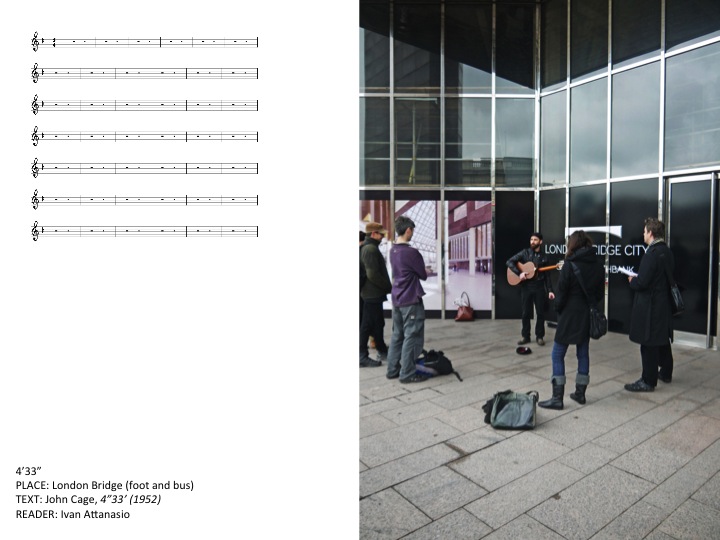
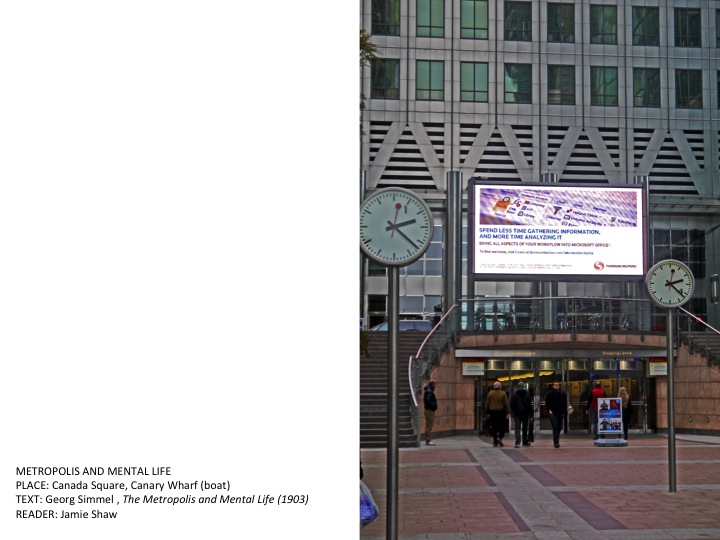
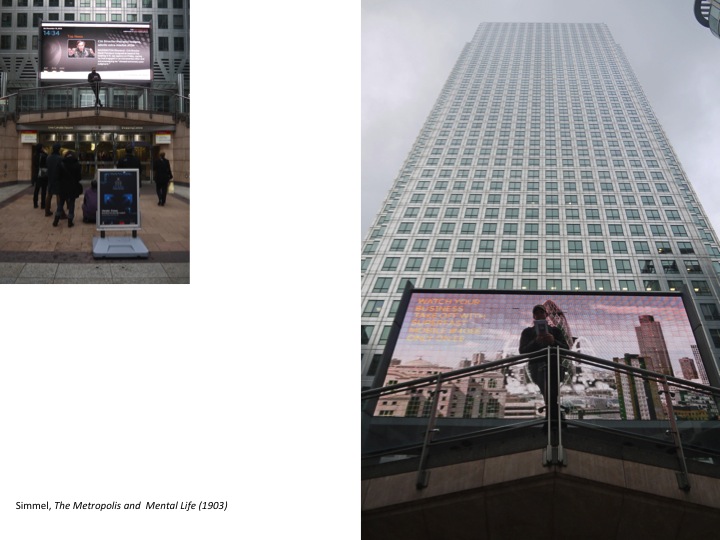
We want to do to space what poetry does to words. Our plan is to perform these texts at different places in the city in which we all live, London. The point of these readings is not to use the selected sites as background, illustration, context or stages to the texts, but to use the texts to articulate these places, our passage between them, and the journey they compose. This journey, on foot, bike, bus, boat, tube and taxi, from one place to the other, is as much a component of a geopoetry reading as the texts themselves. The footsteps of the geopoetry walker are like syllables in the words of a poem, articulating, like the click of the tongue in the mouth of the speaker, the form of the city
they cover. The poetry of the reading is not in the text but in the act of reading itself.
If you would like to be part of this reading, select a text from the list of readings below, and let us know that you would like to commit to reading it. Whether you then come
only to the group of readings your text belongs to, or for as much of the route as you can, or to the whole reading, is up to you.
If that sounds like too much commitment, you are welcome to come along to all, some or even just one of the day’s four reading sessions. You can commit in advance to
reading a text at the designated place; you can turn up and read a text that’s available, or listen to one that’s being read; or you can bring your own text along and read it at some point on the journeys between locations.
However, as the event is as much about the journey between the places as the readings themselves, we ask that if you do wish to participate, you commit to a whole session (morning, afternoon, evening or night), whether as reader or listener, speaker or walker, audience or performer.
40 Fairford House
Cotton Gardens Estate
Kennington Lane
London
SE11 4HW
tel. 0207 735 5000


